Reviews

“Three in One: Analogies for the Trinity” by William David Spencer – A Book Review

Spencer argues for the legitimacy of the use of imagery in teaching the Trinity. For Spencer, such complex doctrine requires natural illustration to help us understand the Triune Godhead. Spencer’s research is thorough, and the structure of his argument is well-presented. I began reading this monograph as a critic who denied any value for using images to teach the Trinity. While I remain unconvinced by Spencer’s arguments, reading Spencer made me realize one way the use of imagery in teaching the Trinity may be helpful, but it may not be in the same way intended by Spencer. Before presenting this one way that imagery could be helpful, here are three arguments against the legitimacy of the use of imagery to teach the Trinity: What then is the help of these illustrations of the Trinity? One thing that this monograph helped me realize as Spencer kept citing his students’ responses is that these illustrations could be a pedagogical tool to negatively demonstrate what the Trinity is not. In other words, since these illustrations all come short of the entire concept of the Trinity, they are helpful in so far as the teacher demonstrates how the Trinity is unlike any of these images. Once the point of distinction is made, the understanding of the biblical teaching of the Trinity becomes apparent. In this negative way—and only in this way—images and illustrations are helpful in the teaching of the Trinity.

Reviews

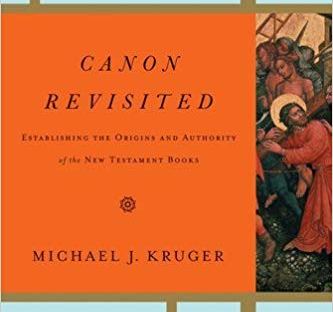
“Canon Revisited” by Michael J. Kruger — A Book Review

In Canon Revisited, Kruger defends the view that Christians have intellectually sufficient grounds for affirming that the 27 books rightfully belong to the canon of the New Testament (p. 20). Kruger responds to the de jure objection to the NT canon, which argues that Christians have no rational basis to know which books are part… Continue reading “Canon Revisited” by Michael J. Kruger — A Book Review

Reflections

Does Jesus’ Death on the Cross Demonstrate God’s Inability? A Theological Response to President Duterte

Before the year ended, President Duterte had another controversial religious comment in an attempt to insult a Roman Catholic view also shared by evangelicals: the death of Jesus on the cross. Duterte argued that if God was nailed to the cross, then he is weak and powerless. The word he used is "nakakawala ng bilib"… Continue reading Does Jesus’ Death on the Cross Demonstrate God’s Inability? A Theological Response to President Duterte

Reviews

Book Review: “Five Views on Sanctification” edited by Stanley Gundry

The Counterpoints Series’ Five Views on Sanctification examines five perspectives within evangelicalism on sanctification: 1) the Wesleyan perspective represented by Melvin Dieter, 2) the Reformed perspective represented by Anthony Hoekema, 3) the Pentecostal perspective represented by Stanley Horton, 4) the Keswick perspective represented by J. Robertson McQuilkin, and 5) the Augustinian-Dispensational perspective represented by John… Continue reading Book Review: “Five Views on Sanctification” edited by Stanley Gundry

Reflections

Is “Original Sin” Unfair? A Theological Response to President Duterte

Last month, social media went crazy with polarizing responses to President Duterte’s comments about the stupidity of the doctrine of original sin. In his speech at the opening of the 2018 National ICT Summit in Davao City, President Duterte questioned the fairness of the doctrine of original sin. Why would God create a perfect world… Continue reading Is “Original Sin” Unfair? A Theological Response to President Duterte